In the ever-evolving world of automation and precision motion control, stepper motors have emerged as a cornerstone technology. Their ability to deliver precise movements, coupled with their reliability and cost-effectiveness, has made them indispensable in industries ranging from manufacturing and robotics to healthcare and 3D printing. However, the true potential of stepper motors is unlocked only when paired with advanced control systems and drivers. Enter the PoStep60-256, a cutting-edge stepper motor driver that redefines performance and flexibility.
This article delves into the intricacies of modern stepper motor technology, with a particular focus on the PoStep60-256 as the central theme. We will explore how this innovative driver integrates seamlessly with stepper motor drivers featuring Modbus communication, the convenience of USB stepper motor controllers, and the fundamental principles behind stepper motor drivers. By the end of this article, you will have a comprehensive understanding of how these components work together to create efficient, precise, and adaptable motion control systems.
Whether you’re an engineer, a hobbyist, or simply someone curious about the technology shaping our world, this article will provide valuable insights into the tools and systems driving the future of automation. Let’s dive into the world of stepper motors and discover how the PoStep60-256 and its counterparts are revolutionizing the way we control motion.
PoStep60-256 – The Heart of Precision Motion Control
When it comes to stepper motor drivers, the PoStep60-256 stands out as a game-changer in the field of precision motion control. Designed to deliver unparalleled performance, this driver combines advanced technology with user-friendly features, making it a top choice for engineers and automation enthusiasts alike. But what exactly makes the PoStep60-256 so special, and why is it considered the heart of modern motion control systems?
At its core, the PoStep60-256 is a high-performance stepper motor driver capable of delivering up to 60V and 6A of current per phase. This makes it suitable for a wide range of applications, from small-scale projects to industrial-grade machinery. One of its standout features is its microstepping capability, which allows for incredibly smooth and precise motor movements. With up to 256 microsteps per full step, the PoStep60-256 ensures minimal vibration and noise, even at low speeds. This level of precision is critical in applications such as CNC machining, 3D printing, and robotic arm control, where accuracy is paramount.
Another key advantage of the PoStep60-256 is its versatility. Unlike traditional stepper motor drivers, which often require complex wiring and configuration, the PoStep60-256 is designed for ease of use. It supports multiple control interfaces, including step/direction, analog voltage, and Modbus communication. This flexibility allows users to integrate the driver into a variety of systems, whether they are working with a standalone controller or a networked automation setup.
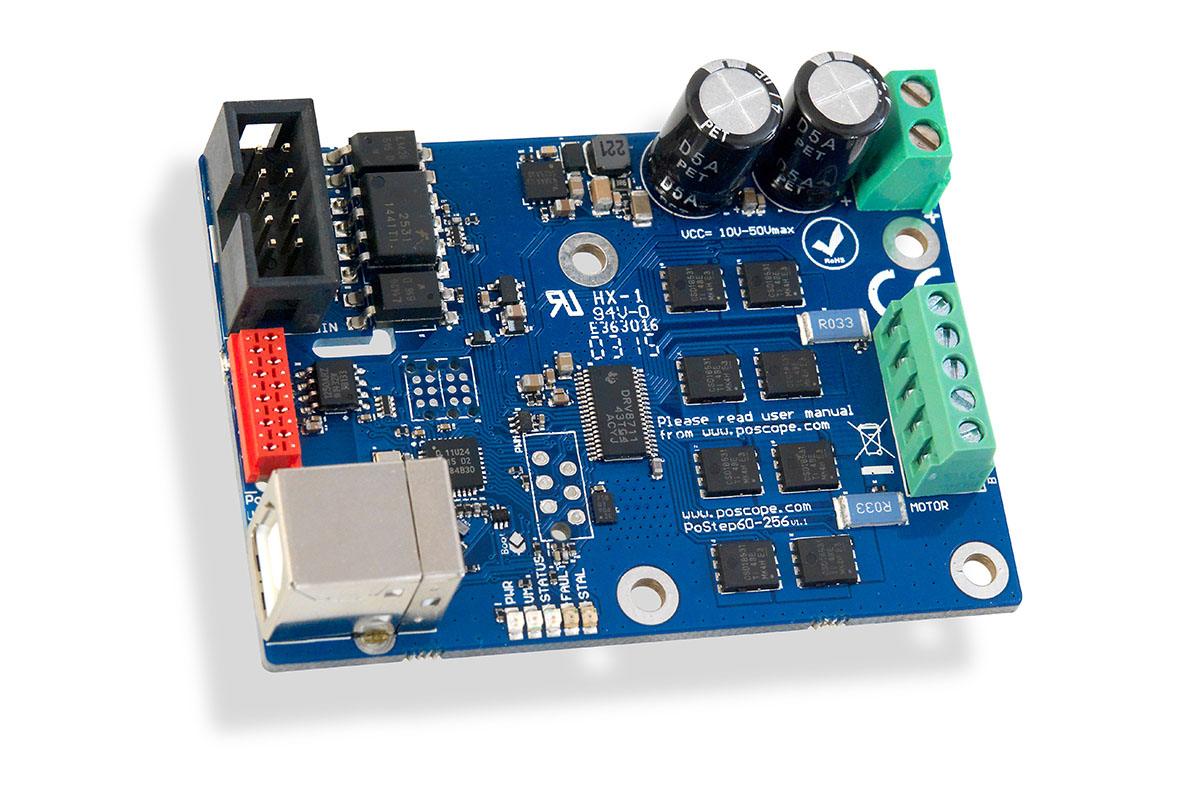
The PoStep60-256 also excels in terms of thermal management and protection. Equipped with advanced heat dissipation mechanisms and built-in safeguards, it can operate reliably even under demanding conditions. Features such as overcurrent protection, overtemperature shutdown, and short-circuit prevention ensure that both the driver and the connected motor are protected from damage. This reliability is crucial in industrial environments, where downtime can be costly.
In addition to its technical capabilities, the PoStep60-256 is designed with scalability in mind. Its compact form factor and modular design make it easy to integrate into existing systems or expand for larger projects. Whether you’re building a single-axis motion control system or a multi-axis robotic platform, the PoStep60-256 provides the performance and flexibility needed to meet your requirements.
In summary, the PoStep60-256 represents the pinnacle of stepper motor driver technology. Its combination of precision, versatility, and reliability makes it an indispensable tool for anyone working in the field of motion control. As we move forward in this article, we will explore how the PoStep60-256 interacts with other critical components, such as stepper motor drivers with Modbus communication, USB stepper motor controllers, and the fundamental principles behind stepper motor drivers. Together, these technologies form the backbone of modern automation, enabling innovations that were once thought impossible.
Stepper Motor Driver with Modbus – Enabling Smart and Connected Systems
In the era of Industry 4.0, connectivity and smart automation are no longer optional—they are essential. This is where stepper motor drivers with Modbus communication come into play, offering a seamless way to integrate motion control systems into larger networked environments. When paired with a powerhouse like the PoStep60-256, these drivers unlock new levels of efficiency, flexibility, and control. But what exactly is Modbus, and why is it such a critical feature in modern stepper motor drivers?
Modbus is a widely adopted communication protocol that enables devices to exchange data over serial lines or Ethernet networks. In the context of stepper motor drivers with Modbus, this protocol allows for real-time monitoring and control of motor parameters such as speed, position, torque, and temperature. By integrating Modbus into the PoStep60-256, users can create highly responsive and adaptable motion control systems that can be managed remotely or automated through software.
One of the most significant advantages of using a stepper motor driver with Modbus is the ability to centralize control. In a multi-axis system, for example, each PoStep60-256 driver can be connected to a central controller or PLC (Programmable Logic Controller) via Modbus. This setup simplifies wiring, reduces installation costs, and makes it easier to troubleshoot and optimize the system. Additionally, Modbus enables real-time feedback, allowing operators to monitor the performance of each motor and make adjustments on the fly.
Another benefit of stepper motor drivers with Modbus is their compatibility with a wide range of industrial automation systems. Whether you’re working with SCADA (Supervisory Control and Data Acquisition) software, HMI (Human-Machine Interface) panels, or custom control algorithms, Modbus provides a standardized way to communicate with the PoStep60-256 and other devices. This interoperability is crucial in industries such as manufacturing, where equipment from different vendors must work together seamlessly.
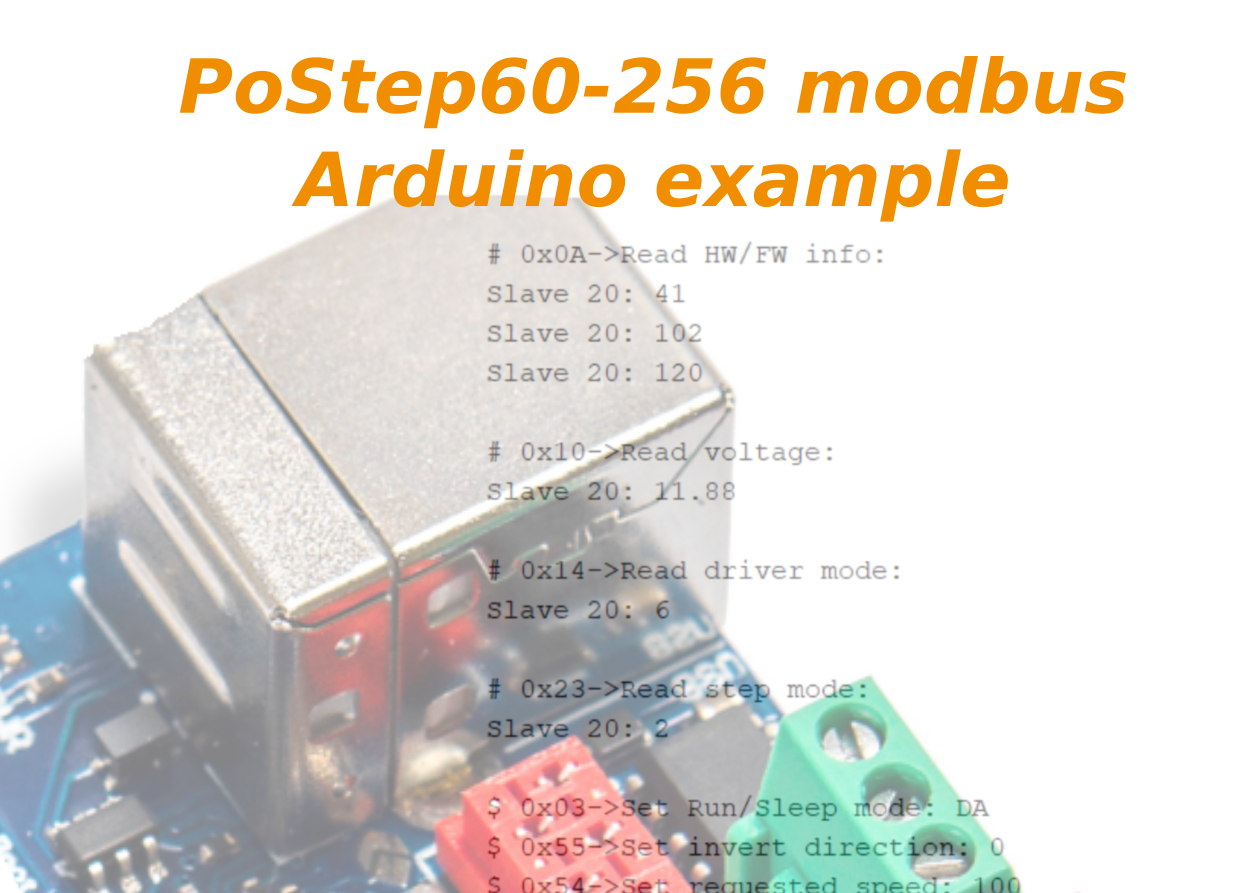
The PoStep60-256 takes full advantage of Modbus communication by offering a comprehensive set of configurable parameters. Users can adjust settings such as microstepping resolution, current limits, and acceleration profiles directly through the Modbus interface. This level of customization ensures that the driver can be tailored to meet the specific requirements of any application. Furthermore, the PoStep60-256 supports both Modbus RTU (Remote Terminal Unit) and Modbus TCP/IP, providing flexibility in terms of communication medium.
In practical terms, the combination of the PoStep60-256 and Modbus opens up a world of possibilities. Imagine a factory where robotic arms, conveyor belts, and CNC machines are all controlled and synchronized through a single network. With stepper motor drivers with Modbus, this level of integration is not only achievable but also cost-effective and scalable.
In conclusion, stepper motor drivers with Modbus represent a significant step forward in the evolution of motion control technology. By enabling smart, connected systems, they empower users to harness the full potential of devices like the PoStep60-256. As we continue to explore the capabilities of modern stepper motor technology, the next chapter will focus on the convenience and versatility of USB stepper motor controllers, another critical component in the automation toolkit.
USB Stepper Motor Controller – Simplifying Motion Control with Plug-and-Play Convenience
In the world of motion control, ease of use and flexibility are just as important as performance. This is where USB stepper motor controllers shine, offering a user-friendly and versatile solution for controlling stepper motors. When combined with a high-performance driver like the PoStep60-256, a USB stepper motor controller can transform complex motion control tasks into simple, plug-and-play operations. But what exactly makes these controllers so convenient, and how do they enhance the functionality of systems like the PoStep60-256?
A USB stepper motor controller is a device that connects to a computer or other host system via a USB interface, allowing users to control stepper motors through software. This eliminates the need for complex wiring or external power supplies, making it an ideal choice for prototyping, small-scale projects, and educational applications. With the PoStep60-256 connected to a USB stepper motor controller, users can easily configure and control motor movements with just a few clicks.
One of the key advantages of a USB stepper motor controller is its simplicity. Unlike traditional controllers that require specialized hardware or programming knowledge, USB controllers are designed to be intuitive and accessible. Most come with user-friendly software that provides a graphical interface for setting parameters such as speed, acceleration, and position. This makes it easy for even beginners to get started with motion control projects.
Another benefit of using a USB stepper motor controller is its portability. Because it connects directly to a computer, it can be used in a wide range of environments, from a lab bench to a factory floor. This portability is particularly useful for testing and debugging, as it allows engineers to quickly make adjustments and observe the results in real time. When paired with the PoStep60-256, this setup ensures that users can achieve precise and reliable motor control wherever they are.
The integration of a USB stepper motor controller with the PoStep60-256 also opens up new possibilities for automation and customization. Many USB controllers support scripting and programming, enabling users to create complex motion sequences or integrate the controller into larger systems. For example, a USB stepper motor controller could be used to automate a camera slider for time-lapse photography, control the movements of a robotic arm, or synchronize multiple motors in a multi-axis system.
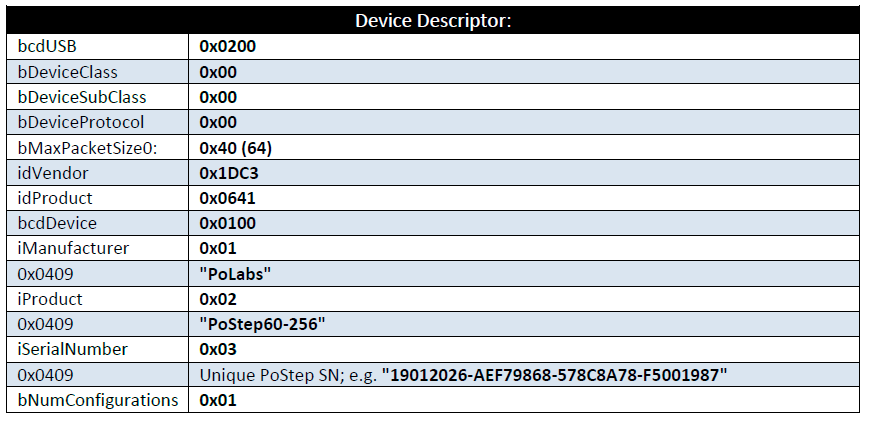
In addition to their ease of use, USB stepper motor controllers are highly versatile. They are compatible with a wide range of stepper motors and drivers, including the PoStep60-256, making them a valuable tool for engineers and hobbyists alike. Furthermore, many USB controllers support multiple communication protocols, such as Modbus or CAN bus, allowing them to be integrated into networked systems when needed.
The combination of the PoStep60-256 and a USB stepper motor controller is particularly powerful in applications that require both precision and flexibility. For instance, in a 3D printing setup, the PoStep60-256 ensures smooth and accurate motor movements, while the USB stepper motor controller provides an easy way to adjust print settings and monitor progress. Similarly, in a laboratory setting, this combination can be used to control automated test equipment with unparalleled accuracy.
In summary, USB stepper motor controllers offer a convenient and versatile solution for motion control, especially when paired with a high-performance driver like the PoStep60-256. Their plug-and-play design, portability, and compatibility make them an essential tool for anyone working with stepper motors. As we move to the next chapter, we will delve into the fundamental principles behind stepper motor drivers, exploring how they work and why they are so critical to modern automation systems.
Stepper Motor Driver Explained – The Engine Behind Precision Motion
At the heart of every stepper motor system lies a critical component: the stepper motor driver. This device is responsible for converting control signals into precise movements, making it the engine behind precision motion control. Whether you’re using a high-performance driver like the PoStep60-256, a stepper motor driver with Modbus, or a USB stepper motor controller, understanding how these drivers work is essential for optimizing their performance. So, what exactly is a stepper motor driver, and how does it function?
A stepper motor driver is an electronic device that controls the operation of a stepper motor by regulating the current and voltage supplied to its coils. Unlike traditional motors, which rotate continuously when power is applied, stepper motors move in discrete steps, making them ideal for applications that require precise positioning. The stepper motor driver plays a crucial role in this process by translating control signals—such as step and direction pulses—into the appropriate electrical currents that drive the motor.
One of the key functions of a stepper motor driver is microstepping. This technique divides each full step of the motor into smaller increments, allowing for smoother and more precise movements. For example, the PoStep60-256 supports up to 256 microsteps per full step, enabling it to achieve extremely fine resolution. This is particularly important in applications like CNC machining, 3D printing, and microscopy, where even the slightest deviation can affect the outcome.
Another critical aspect of a stepper motor driver is current regulation. Stepper motors require a specific amount of current to operate efficiently, and the driver ensures that this current is delivered consistently, regardless of load or speed variations. The PoStep60-256, for instance, features advanced current control algorithms that optimize motor performance while minimizing heat generation. This not only extends the lifespan of the motor but also improves overall system efficiency.
In addition to microstepping and current regulation, a stepper motor driver often includes various protection features to safeguard both the motor and the driver itself. These may include overcurrent protection, overtemperature shutdown, and short-circuit prevention. Such features are especially important in industrial environments, where equipment is often subjected to harsh conditions. The PoStep60-256 excels in this regard, offering robust protection mechanisms that ensure reliable operation even under demanding circumstances.
The versatility of a stepper motor driver explained is another factor that makes it indispensable in modern automation. Drivers like the PoStep60-256 can be configured to work with a wide range of motors and control interfaces, including step/direction, analog voltage, and Modbus communication. This flexibility allows users to tailor the driver to their specific needs, whether they’re building a simple single-axis system or a complex multi-axis robotic platform.
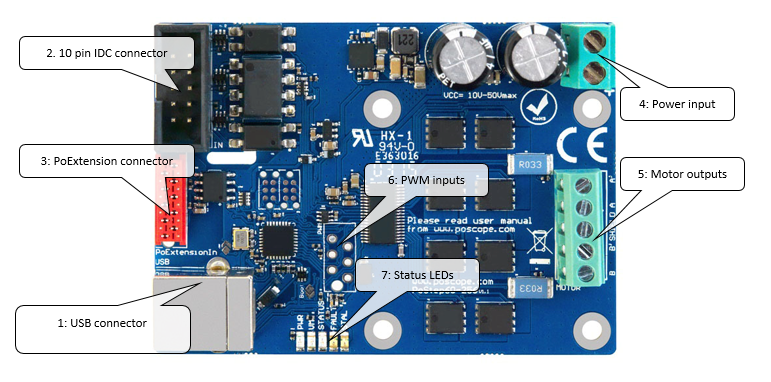
To better understand the role of a stepper motor driver, consider a typical application: a CNC router. In this setup, the PoStep60-256 would be responsible for controlling the movement of the router’s axes, ensuring that each cut is made with pinpoint accuracy. The driver receives commands from a controller—such as a USB stepper motor controller—and translates them into precise motor movements. Meanwhile, the stepper motor driver with Modbus functionality allows the system to be integrated into a larger network, enabling real-time monitoring and control.
In conclusion, the stepper motor driver is the unsung hero of precision motion control. By converting control signals into precise motor movements, it enables the high levels of accuracy and reliability that modern automation systems demand. Whether you’re using a PoStep60-256, a stepper motor driver with Modbus, or a USB stepper motor controller, understanding the principles behind these devices is key to unlocking their full potential. As we wrap up this article, let’s reflect on how these technologies work together to shape the future of motion control.
A Deep Dive into PoKeys57E, RC Simulator Interfaces and DAQ Devices
Optimizing CNC Plasma Cutting: Understanding Torch Height Control and Key Components
The Synergy of Innovation in Motion Control
As we reach the end of this exploration into the world of stepper motor technology, it’s clear that the future of precision motion control is being shaped by a combination of advanced hardware and intelligent systems. At the center of this revolution is the PoStep60-256, a stepper motor driver that exemplifies performance, versatility, and reliability. Its ability to deliver precise movements, coupled with its compatibility with stepper motor drivers featuring Modbus communication and USB stepper motor controllers, makes it a cornerstone of modern automation.
Throughout this article, we’ve examined how these components work together to create efficient and adaptable motion control systems. The PoStep60-256 stands out as a high-performance driver capable of handling demanding applications, while stepper motor drivers with Modbus enable smart, connected systems that can be monitored and controlled in real time. Meanwhile, USB stepper motor controllers simplify the process of configuring and managing motor movements, making advanced motion control accessible to users of all skill levels. Finally, understanding the fundamental principles behind stepper motor drivers has given us insight into how these devices translate control signals into precise mechanical actions.
The synergy between these technologies is what drives innovation in industries ranging from manufacturing and robotics to healthcare and entertainment. Whether it’s a CNC machine carving intricate designs, a 3D printer creating complex prototypes, or a robotic arm performing delicate surgeries, the combination of the PoStep60-256, Modbus-enabled drivers, and USB controllers ensures that these systems operate with unparalleled precision and efficiency.
As we look to the future, the continued evolution of stepper motor technology promises even greater advancements. With the rise of Industry 4.0 and the Internet of Things (IoT), the integration of intelligent communication protocols like Modbus will become increasingly important. Similarly, the convenience and flexibility offered by USB stepper motor controllers will continue to make them a valuable tool for both professionals and hobbyists. And at the heart of it all, drivers like the PoStep60-256 will remain essential for delivering the performance and reliability that modern applications demand.
In conclusion, the world of motion control is a testament to the power of innovation and collaboration. By combining cutting-edge hardware like the PoStep60-256 with intelligent communication systems and user-friendly controllers, we are unlocking new possibilities and pushing the boundaries of what’s achievable. Whether you’re an engineer designing the next generation of automation systems or a hobbyist exploring the potential of stepper motors, these technologies provide the tools you need to bring your ideas to life.
The future of motion control is here, and it’s driven by precision, connectivity, and innovation. With the PoStep60-256 and its counterparts leading the way, the possibilities are endless.