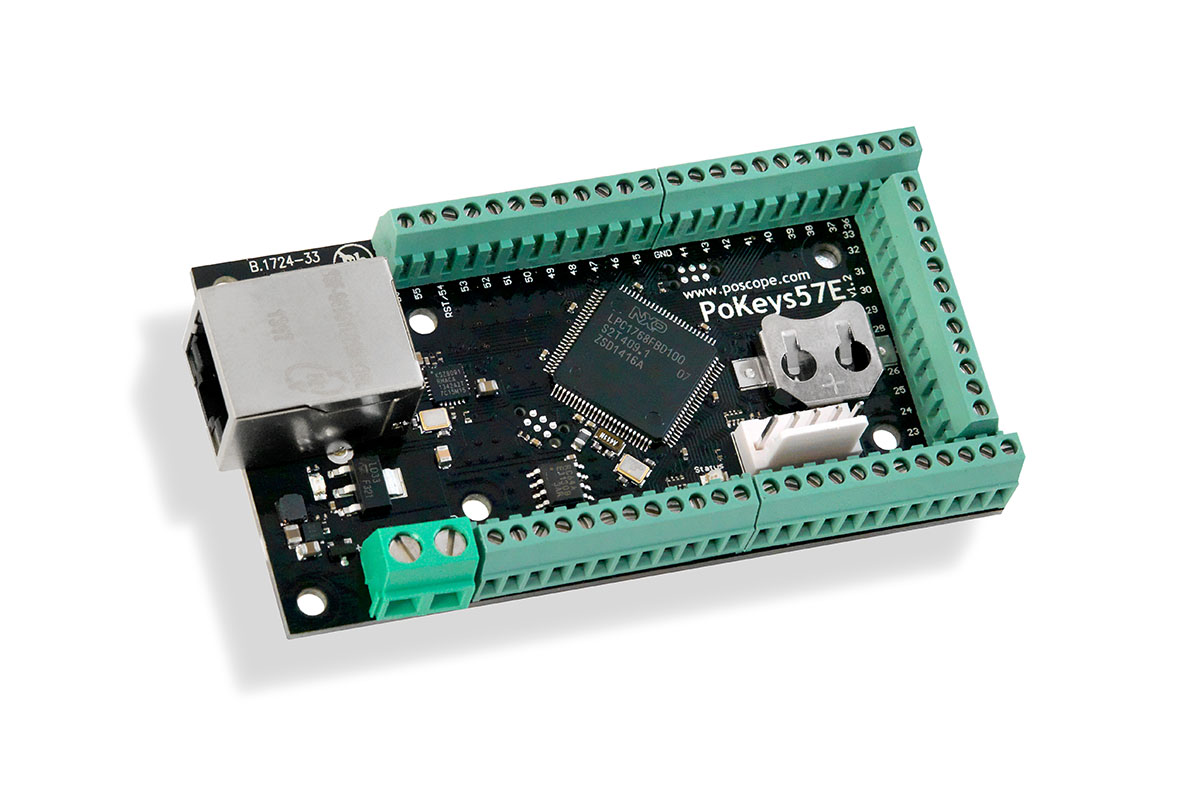
In the world of automation, data acquisition, and remote control applications, versatility and compatibility are key. Whether you’re an electronics hobbyist, an industrial engineer, or a researcher, the ability to interface different technologies seamlessly can significantly enhance your workflow. One such powerful and adaptable device is the PoKeys57E, an Ethernet-based I/O controller designed for a variety of applications, including CNC machine control, industrial automation, and custom-built hardware solutions.
This article explores how the PoKeys57E can be effectively used in different scenarios, focusing on its role in RC simulation, data logging, and data acquisition. We will start by examining how it serves as an RC simulator interface, allowing users to connect real-world controllers to virtual environments. Next, we will explore its integration with a Raspberry Pi temperature logger, a valuable application for monitoring and recording environmental conditions. Finally, we will discuss its relationship with DAQ devices, which are essential for data acquisition in industrial and scientific fields.
By understanding the capabilities of the PoKeys57E in these various applications, users can unlock its full potential and create efficient, customized solutions for their needs.
Using PoKeys57E as an RC Simulator Interface
The PoKeys57E is a highly versatile I/O device that finds applications in various fields, one of which is radio-controlled (RC) simulation. Many RC enthusiasts and professionals use flight or vehicle simulators to practice their skills without the risk of damaging expensive equipment. However, to achieve a truly realistic experience, a proper RC simulator interface is essential. This is where the PoKeys57E comes into play, offering a seamless way to connect real RC controllers to a computer-based simulation environment.
How PoKeys57E Enhances RC Simulation
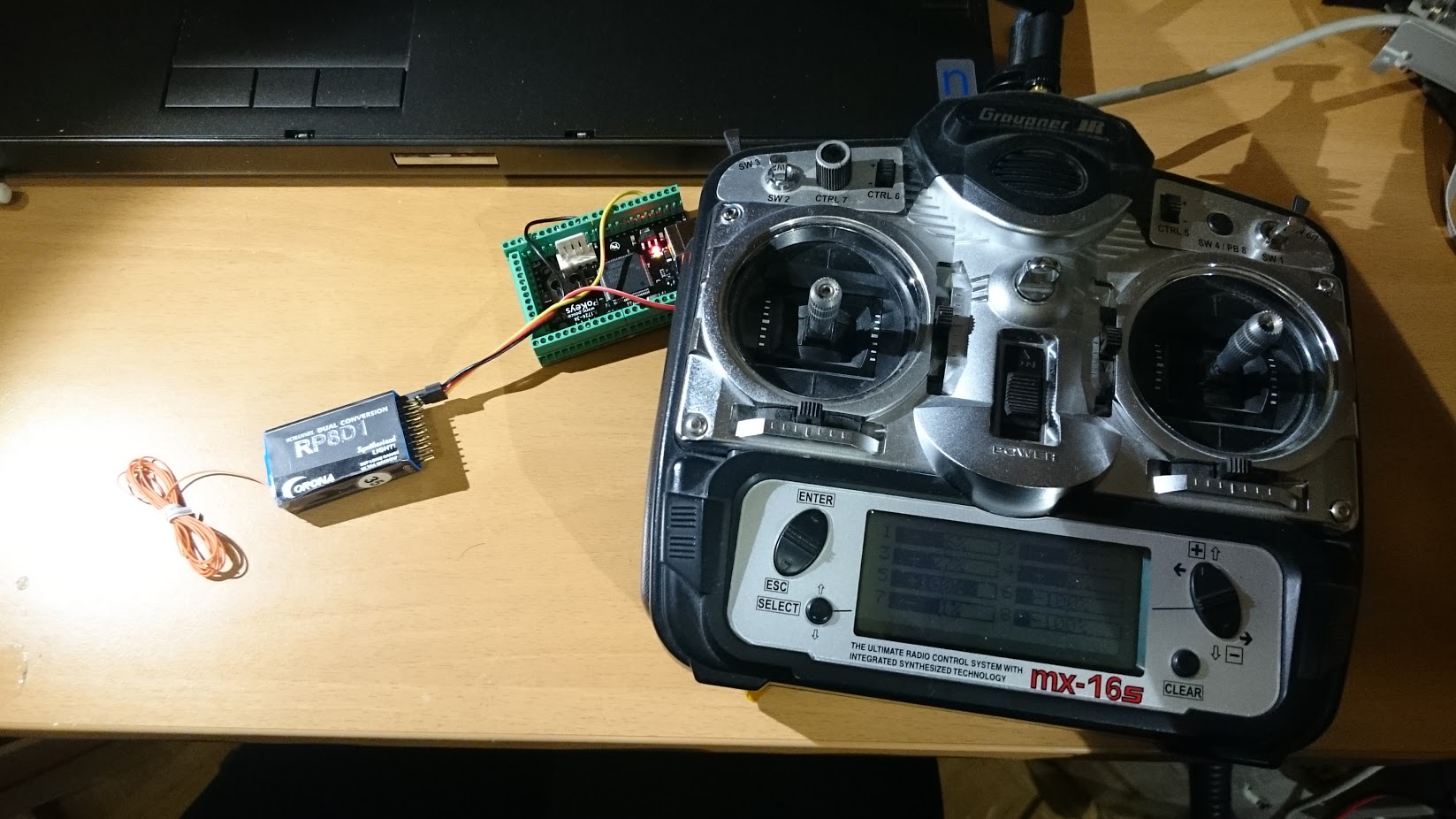
An RC simulator interface serves as a bridge between a physical RC transmitter and the simulation software running on a PC. The PoKeys57E, with its extensive input/output options and Ethernet connectivity, makes this process straightforward. By connecting an RC transmitter to the PoKeys57E, the device can interpret the control signals and send them to the simulator software, allowing for precise and real-time control.
One of the major advantages of using the PoKeys57E for this purpose is its ability to handle multiple input types. Whether the RC transmitter uses PWM (Pulse Width Modulation) or PPM (Pulse Position Modulation) signals, the PoKeys57E can read and process these signals, ensuring accurate reproduction of user input within the simulation. This makes it a flexible solution for different types of RC controllers, whether they are used for airplanes, drones, boats, or ground vehicles.
Setting Up PoKeys57E as an RC Simulator Interface
The setup process for using the PoKeys57E as an RC simulator interface is relatively simple and requires only a few components:
PoKeys57E Device – The core hardware that acts as the interface.
RC Transmitter – A radio controller that generates control signals.
Connection Cables – Depending on the transmitter, this may include standard servo cables or custom wiring.
PC with RC Simulation Software – The computer runs the software that receives and processes input signals.
To connect the PoKeys57E to an RC transmitter, users typically link the output of the transmitter to one of the digital input pins on the PoKeys57E. The accompanying PoKeys software is then used to configure the device to recognize and process these signals. Once configured, the RC simulator interface allows the computer to receive real-time input from the RC transmitter, effectively translating hand movements into virtual simulation control.
Benefits of Using PoKeys57E for RC Simulation
Using the PoKeys57E as an RC simulator interface provides several advantages:
- Realistic Control Experience – Because the same transmitter used for actual RC models is employed in the simulation, the transition between training and real-world applications becomes seamless.
- High Precision Input – The PoKeys57E ensures accurate signal processing, reducing latency and enhancing simulation realism.
- Ethernet Connectivity – Unlike USB-based solutions, Ethernet provides a stable and interference-free connection.
- Customizability – Users can program additional functionalities, such as adding extra controls or integrating telemetry feedback into the simulation.
With its reliability and adaptability, the PoKeys57E proves to be an excellent choice for anyone looking to enhance their RC simulation experience. Its ability to function as an RC simulator interface opens up a world of possibilities, bridging the gap between virtual training and real-world operation.
Integrating PoKeys57E with a Raspberry Pi Temperature Logger
In industrial automation, environmental monitoring, and DIY electronics projects, logging temperature data is a crucial task. A Raspberry Pi temperature logger is a popular solution for recording and analyzing temperature over time, often used in applications such as greenhouse monitoring, server room temperature management, and laboratory experiments. By integrating the PoKeys57E with a Raspberry Pi temperature logger, users can create a powerful and flexible temperature monitoring system with enhanced connectivity and expanded input options.
Why Use PoKeys57E with a Raspberry Pi Temperature Logger?
While the Raspberry Pi itself has GPIO (General-Purpose Input/Output) pins, its capabilities are somewhat limited when handling multiple sensors or complex industrial environments. The PoKeys57E, on the other hand, is designed to manage a large number of I/O signals and can communicate with the Raspberry Pi over Ethernet. This allows the PoKeys57E to act as an intermediary device, collecting temperature data from multiple sensors and transmitting it efficiently to the Raspberry Pi for logging and analysis.
By using the PoKeys57E, a Raspberry Pi temperature logger can benefit from:
- Increased Sensor Compatibility – The PoKeys57E supports a variety of temperature sensors, including thermocouples, thermistors, and digital temperature probes.
- Stable Ethernet Communication – Unlike direct GPIO connections, Ethernet-based communication is more reliable and allows for remote monitoring.
- Expanded I/O Capabilities – The PoKeys57E can handle multiple sensor inputs simultaneously, making it ideal for multi-point temperature logging applications.
Setting Up a PoKeys57E-Based Raspberry Pi Temperature Logger
Creating a Raspberry Pi temperature logger with the PoKeys57E requires a few key components:
PoKeys57E – Acts as the primary sensor interface.
Raspberry Pi – Handles data processing and logging.
Temperature Sensors – Such as DS18B20 digital sensors or PT100 thermocouples.
Ethernet Connection – Links the PoKeys57E and Raspberry Pi for data transmission.
The setup process involves the following steps:
Connect Temperature Sensors – Attach the temperature sensors to the PoKeys57E input pins, ensuring proper signal wiring.
Configure PoKeys Software – Use the PoKeys configuration tool to enable sensor readings and set up communication with the Raspberry Pi.
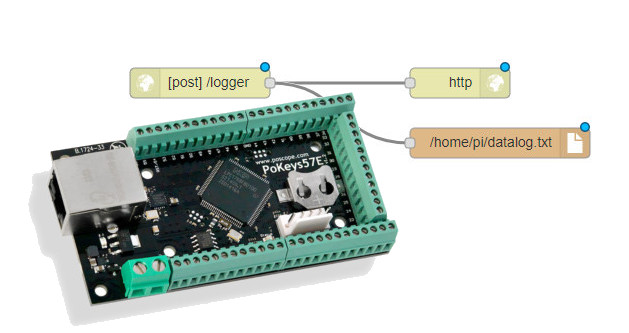
Establish Communication – Use a Python script or another programming language on the Raspberry Pi to request data from the PoKeys57E via Ethernet.
Log and Visualize Data – Store the temperature readings in a database or CSV file, and use a web dashboard or local interface to display real-time temperature trends.
Applications of a PoKeys57E-Enhanced Temperature Logger
By integrating the PoKeys57E with a Raspberry Pi temperature logger, users can create robust solutions for:
- Industrial Temperature Monitoring – Track and log machine temperatures to prevent overheating and failures.
- Environmental Monitoring – Measure and record climate conditions in greenhouses, labs, or remote locations.
- Home Automation – Control heating and cooling systems based on logged temperature data.
- Data Analysis and Reporting – Generate reports on temperature trends over time for research or compliance purposes.
Advantages of Using PoKeys57E for Temperature Logging
- Scalability – Supports multiple sensors without overloading the Raspberry Pi’s GPIO.
- Reliability – Ethernet connectivity ensures stable data transmission.
- Flexibility – Can integrate additional sensors or automation features if needed.
By combining the PoKeys57E with a Raspberry Pi temperature logger, users can build an advanced, scalable, and efficient monitoring system suited for various applications, from home automation to industrial-grade temperature tracking.
PoKeys57E and DAQ Devices for Advanced Data Acquisition
In industrial automation, scientific research, and engineering applications, data acquisition (DAQ) is a fundamental process that involves collecting and analyzing various types of sensor data. DAQ devices are specialized hardware components designed to interface with sensors, convert analog signals into digital data, and transmit that data to a computer or control system. The PoKeys57E, with its extensive I/O capabilities and Ethernet connectivity, can function as a powerful and cost-effective DAQ solution, either as a standalone unit or in conjunction with dedicated DAQ devices.
How PoKeys57E Complements DAQ Devices
Traditional DAQ devices are often expensive and require specialized software for configuration. The PoKeys57E, however, offers a flexible and affordable alternative, making it an attractive option for DIY projects, industrial applications, and research experiments. While high-end DAQ devices provide extreme precision and high sampling rates, the PoKeys57E can handle a wide range of data acquisition tasks, including:
- Analog and Digital Signal Processing – The PoKeys57E features multiple analog and digital inputs, allowing it to capture sensor data from various sources, including temperature probes, pressure sensors, and light sensors.
- Ethernet Connectivity – Unlike USB-based DAQ devices, which have cable length limitations, the PoKeys57E can transmit data over long distances via Ethernet, making it suitable for remote monitoring applications.
- Custom Programming and Integration – The device supports custom scripting and can be programmed to interact with other hardware or software, enhancing its adaptability for different DAQ scenarios.
Setting Up PoKeys57E for Data Acquisition
To use the PoKeys57E as a DAQ solution, the following components are required:
PoKeys57E – The central device for data acquisition.
Sensors and Actuators – Depending on the application, this may include temperature sensors, pressure transducers, or motion detectors.
Computer or Controller – A PC, Raspberry Pi, or industrial controller to process and log data.
Ethernet Connection – Ensures reliable and high-speed data transfer.
The setup process involves:
Connecting Sensors – Attach analog and digital sensors to the input terminals of the PoKeys57E.
Configuring Data Acquisition – Use the PoKeys software to define input ranges, signal processing parameters, and data transmission settings.
Interfacing with a Computer – Write a script (e.g., in Python or C++) to fetch and log the sensor data in real-time.
Data Analysis and Visualization – Store the collected data in a database or process it using data visualization tools for further analysis.
Applications of PoKeys57E as a DAQ Device
The PoKeys57E can be used in numerous DAQ device applications, such as:
- Industrial Automation – Monitoring and controlling industrial processes using real-time sensor data.
- Environmental Data Logging – Collecting weather or pollution data for analysis and decision-making.
- Research and Development – Conducting experiments that require precise data acquisition and processing.
- Machine Condition Monitoring – Logging vibration, temperature, and pressure data to predict equipment failures.
Advantages of Using PoKeys57E for Data Acquisition
- Cost-Effective – Offers DAQ functionality at a fraction of the cost of specialized DAQ devices.
- Ethernet-Based Communication – Enables remote monitoring and control without the limitations of USB-based alternatives.
- Expandable and Customizable – Can be integrated with other sensors, controllers, or software systems.
By leveraging the capabilities of the PoKeys57E, users can build efficient and scalable DAQ devices for various applications, making data acquisition more accessible and flexible than ever before.
Expanding PoKeys57E Capabilities with DAQ Devices
When it comes to industrial automation, scientific research, and precision monitoring, DAQ devices (Data Acquisition devices) play a crucial role in collecting and analyzing sensor data. These specialized devices convert real-world signals—such as temperature, pressure, and voltage—into digital data for further processing. While the PoKeys57E is a powerful I/O controller on its own, integrating it with dedicated DAQ devices significantly expands its capabilities, enabling more complex data acquisition tasks.
Why Combine PoKeys57E with DAQ Devices?
Although the PoKeys57E offers extensive input and output options, high-end DAQ devices provide superior accuracy, faster sampling rates, and enhanced signal conditioning features. By combining the two, users can benefit from:
- Increased Precision – Many DAQ devices offer high-resolution analog-to-digital conversion (ADC), allowing for more accurate measurements than the PoKeys57E alone.
- Scalability – The PoKeys57E can act as a bridge, controlling multiple DAQ devices in large-scale data acquisition systems.
- Improved Connectivity – With Ethernet-based communication, the PoKeys57E can link to remote DAQ devices, facilitating distributed data collection.
This hybrid approach allows users to leverage the strengths of both systems, creating a more robust and versatile data acquisition setup.
How to Integrate PoKeys57E with DAQ Devices
To connect the PoKeys57E with external DAQ devices, follow these steps:
Identify the Data Acquisition Needs – Determine the type of signals you need to measure (e.g., temperature, voltage, current).
Choose Compatible DAQ Devices – Select a DAQ device that complements the PoKeys57E, considering factors such as resolution, sampling rate, and input types.
Establish Communication – Use analog or digital input connections to link the PoKeys57E to the DAQ device. Alternatively, Ethernet or serial communication protocols can be used.
Configure Data Processing – Set up the PoKeys57E to act as an intermediary, reading and transmitting data from the DAQ devices to a computer or control system.
Log and Analyze Data – Use specialized software to store, visualize, and analyze the collected data.

By following these steps, users can integrate the PoKeys57E with professional DAQ devices to build an efficient and scalable data acquisition system.
Applications of PoKeys57E and DAQ Devices
By integrating DAQ devices with the PoKeys57E, a wide range of advanced applications becomes possible, including:
- Industrial Process Monitoring – Collecting real-time data from manufacturing equipment to optimize efficiency.
- Environmental Data Collection – Measuring parameters such as temperature, humidity, and air quality for research purposes.
- Automated Testing Systems – Using DAQ devices to log electrical signals and mechanical responses in quality control applications.
- Biomedical Research – Recording physiological signals such as ECG, EEG, or temperature variations for medical analysis.
Advantages of a PoKeys57E-DAQ Hybrid System
- Flexibility – Users can mix and match DAQ devices with the PoKeys57E to create custom solutions.
- Remote Monitoring – Ethernet connectivity allows data collection from distant locations.
- Cost Efficiency – Instead of relying solely on high-end DAQ devices, the PoKeys57E provides a cost-effective way to manage I/O while integrating with specialized acquisition hardware.
By combining the PoKeys57E with DAQ devices, users can develop advanced data acquisition solutions tailored to their specific needs, ensuring precision, scalability, and efficiency in various fields.
Smart, Connected, and Precise: The Role of the PoStep60-256 in Modern Motion Control Systems
A Deep Dive into PoKeys57E, RC Simulator Interfaces and DAQ Devices
Optimizing CNC Plasma Cutting: Understanding Torch Height Control and Key Components
Conclusion
The PoKeys57E is a highly adaptable and powerful device that serves as a bridge between various digital and analog systems, making it an excellent choice for applications in automation, simulation, and data acquisition. Throughout this article, we explored how the PoKeys57E can be used in different contexts, each demonstrating its versatility and efficiency.
First, we looked at how the PoKeys57E functions as an RC simulator interface, enabling real-world RC controllers to interact seamlessly with simulation software. This capability enhances training and reduces the risks associated with real-world RC vehicle operation.
Next, we examined how integrating the PoKeys57E with a Raspberry Pi temperature logger can create a powerful and scalable monitoring system. By leveraging the PoKeys57E’s multiple input options and Ethernet connectivity, users can log temperature data efficiently, whether for home automation, industrial environments, or research applications.
We then explored how the PoKeys57E can serve as a basic DAQ device, collecting and transmitting sensor data for various automation and monitoring applications. While the PoKeys57E provides an affordable entry point into data acquisition, it can also be combined with professional DAQ devices to enhance precision, scalability, and overall system performance.
Finally, we discussed the advantages of integrating the PoKeys57E with high-end DAQ devices to create a hybrid data acquisition system. This approach allows users to leverage the cost-effective connectivity of the PoKeys57E while benefiting from the advanced signal processing capabilities of specialized DAQ devices.
By understanding these different applications, users can unlock the full potential of the PoKeys57E in various projects. Whether used in RC simulation, environmental monitoring, or industrial automation, the PoKeys57E provides a reliable and flexible solution for anyone looking to bridge the gap between hardware and software in modern electronics and automation systems.